Some stories are so deeply ingrained in culture that they’ve been told and retold for centuries. The Trojan War is one of them — a tale of gods, heroes, and battles that has captivated readers since Homer’s Iliad. But what happens when the spotlight shifts away from the warriors and onto the women whose lives were upended by war? Pat Barker’s The Silence of the Girls takes on that challenge, offering a fresh perspective on a timeless epic.
📖 Quick Overview
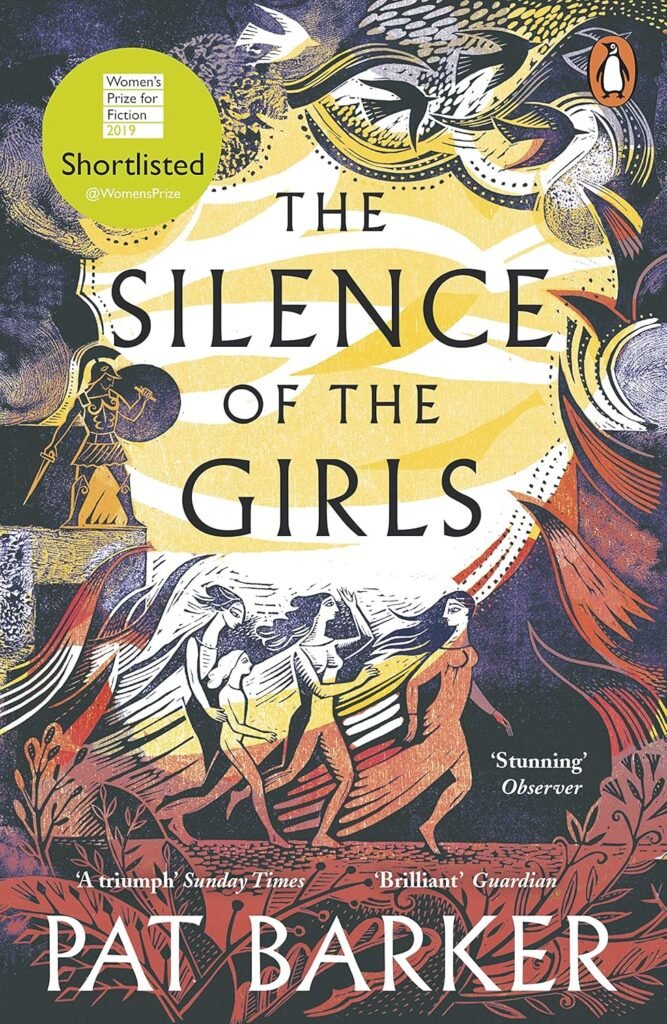
The Silence of the Girls – Pat Barker
There was a woman at the heart of the Trojan War whose voice has been silent – until now. Discover the greatest Greek myth of all – retold by the witness that history forgot . . .
Briseis was a queen until her city was destroyed. Now she is a slave to the man who butchered her husband and brothers. Trapped in a world defined by men, can she survive to become the author of her own story?
📌 TL;DR
A fierce feminist retelling of The Iliad, centring Briseis and the silenced women of war.
💥 Hook
“Great Achilles. Brilliant Achilles, shining Achilles, godlike Achilles… How the epithets pile up. We never called him any of those things; we called him ‘the butcher.’”
💬 The Big Idea
What does it mean to survive when survival comes at the cost of freedom, identity, and voice? Barker asks us to reckon with the stories that history ignores: not the glory of warriors, but the endurance of women forced to bear their brutality.
🧠 What’s it About?
The Trojan War — but told through the eyes of Briseis, Achilles’ captive, who bears witness to both the violence and the silences of women erased from the epic.
🔍 Why It’s More Than Just the Blurb
Instead of glorifying war, Barker strips it bare. She reclaims a space for voices left out of Homer’s narrative, turning myth into something raw, human, and painfully present.
🔍 Deep Dive
Barker doesn’t romanticise — she lingers in the aftermath: the stolen lives, the loss of autonomy, and the resilience of women finding ways to endure. It’s not just about retelling The Iliad; it’s about questioning who gets remembered and why.
📚 What’s Inside? (Spoiler-Free Breakdown)
- A retelling of the Trojan War from Briseis’s perspective
- Themes of power, silence, memory, and survival
- A grounded, unflinching voice that refuses to glorify violence
- Humanises Achilles and his rage without excusing it
- Centres the experiences of women history made invisible
Full Review By Jasmine
★ ★ ★ ★
Pat Barker’s The Silence of the Girls is undeniably well written. The opening chapters are especially gripping — they pull you straight into the chaos of war and Briseis’s world with a vividness that’s hard to look away from. The prose is clear, direct, and haunting, which makes the story both accessible and deeply affecting. I was hooked almost immediately, and the storytelling itself is powerful enough to carry you through even the bleakest parts.
That said, there were elements that didn’t sit as well with me. The dialogue sometimes broke my immersion — Achilles saying things like “sod off” and “cheers, lads” or men tossing around “bloody” made me stop and think: wait, we’re supposed to be in ancient Greece, right? The modern, British inflections felt jarring, like I’d been pulled out of the historical world Barker was otherwise building so effectively. On the other hand, I can also see how this choice might make the book feel more immediate and easier for some readers to connect with. So while it wasn’t quite my preference, I recognise it’s very much dependent on the reader.
Another thing I wrestled with was how much of the narrative still ended up revolving around Achilles. I came away knowing far more about him — his anger, his grief, his humanity — than I did about Briseis, whose voice is meant to be at the centre. In many ways, Briseis often felt like a side character, more an observer of Achilles than a fully independent figure. The switches between Briseis’s first-person narration and the third-person sections about Achilles only emphasized this imbalance for me; the effect was a bit jarring and reinforced the sense that Achilles still dominated the novel.
Of course, some of this comes down to the original story itself — Briseis’s role in The Iliad is tied to Achilles, so it makes sense that he looms large. Still, I found myself wishing for more of Briseis as her own person, not just as an extension of the men around her. That absence makes it tricky for me to read this entirely as a “feminist retelling.” While Barker certainly reframes the story through women’s voices, the narrative gravity is still often centred on Achilles, which complicates the novel’s feminist ambitions.
All of that said, I don’t think those critiques erase how engrossing and powerful the book is. The Silence of the Girls succeeds in making you rethink the Iliad and forces you to sit with the pain of the silenced, even if it doesn’t completely escape the pull of the men it’s critiquing. For me, it was a strong four-star read: beautifully written, thought-provoking, and important, but with a few choices that pulled me out of the story and left me wishing for just a little more Briseis.
🎭 Mood & Matchmaker
Sombre, unflinching, yet quietly powerful. Perfect for readers of Madeline Miller or Natalie Haynes who want myth retellings with grit.
🌈 Vibes Check
What kind of vibe are you in for? Let’s break it down:
✍️ Writing Style: Spare, lyrical, cutting
⚔️ Violence Level: Brutal but unsensationalised
🏛️ Myth Retelling: Grounded, feminist, revisionist
🌊 Emotional Range: Grief-heavy, haunting, quietly defiant
🔄 Mood Matches
If you liked:
- Circe by Madeline Miller
- A Thousand Ships by Natalie Haynes
- Women of Troy (the sequel by Barker)
✨ Loved The Silence of the Girls?
Why stop here—dive deeper into epic retellings and legendary tales with our Mythology Fantasy Books list.
🧃 Emotional Map
💔 Emotional gut-punches — 9/10
😨 Bleakness of war — 8/10
🌊 Quiet resilience — 7/10
🧠 Stays with you afterwards — 10/10
🎯 For the Right Reader
If you want a feminist retelling that doesn’t sugarcoat, that asks harder questions than it answers, and that leaves you with the weight of history’s silences — this is it.
📦 Who Will Love This?
- Fans of myth retellings
- Readers who love feminist historical fiction
- Anyone who wants The Iliad turned inside out
🧭 Where I Found It
The cover instantly stood out to me and when I saw it was on offer on Kindle, I knew it would be my next read.
💡 Extra Curiosities
Got some quick questions about The Silence of the Girls? Here are a few things readers often wonder:
What is The Silence of the Girls book about?
It’s a feminist retelling of Homer’s Iliad from the perspective of Briseis, a Trojan queen captured by Achilles and given to him as a war prize. Through Briseis’s eyes, readers see the Trojan War not as a tale of glory but as one of survival, trauma, and resilience.
Are Achilles and Patroclus lovers in Silence of the girls?
Yes, the relationship of Achilles and Patroclus is depicted as somewhat romantic, though it’s not the central focus of the novel. Barker portrays their bond with intimacy and complexity.
What is the message of The Silence of the Girls?
The key message is about voice, memory, and survival. Barker asks: who gets remembered in history, and whose stories are silenced? By giving Briseis and the captive women a voice, she challenges the glorification of war and emphasises the endurance of women who bore its cruelties. The novel reminds us that history is often told by the victors, but the silenced still carried stories worth telling.
👋 Final Thoughts
As a reading experience, The Silence of the Girls is absorbing, thought-provoking, and at times devastating. Barker invites us to sit with uncomfortable truths and re-examine a story we thought we knew. Whether you come to it for its mythological roots, its exploration of women’s voices, or simply for its engrossing storytelling, this is a novel that demands to be read and remembered.